In my role as an operations head overseeing multiple project deployments across Bangalore, I’ve come to understand that business travel is not just about logistics—it’s about people. When employees are constantly moving between cities, working long hours, and adapting to new environments, stress becomes inevitable. What many organizations underestimate, however, is how significantly the choice of accommodation can either reduce or amplify that stress.
Over the past few years, I’ve been responsible for arranging stays for engineers, consultants, and project managers working in and around the Bommasandra Industrial Area. Initially, like many companies, we relied heavily on hotels. On paper, hotels seemed like the obvious choice—standardized services, daily housekeeping, and readily available rooms. But in reality, the experience often fell short when it came to long-term comfort and employee well-being.
The most common feedback I received from team members staying in hotels was a sense of fatigue that went beyond work itself. They felt confined to a single room, disconnected from any sense of routine, and constantly dependent on external services for even the simplest needs like meals or laundry. Over time, this lack of control over their daily environment began to affect not just their mood, but also their productivity and engagement at work.
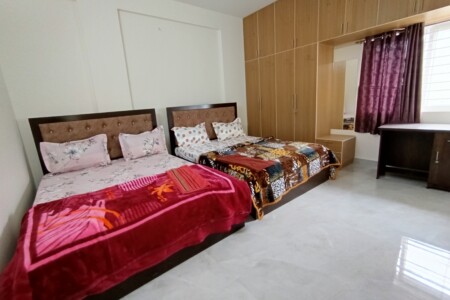
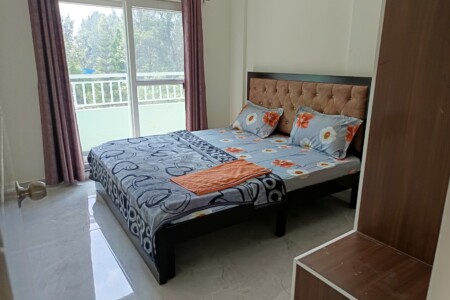
This is when we started exploring service apartments as an alternative, and Sagar Niwas near Bommasandra quickly became a preferred choice. The difference in employee feedback was immediate and consistent. Instead of describing their stay as “manageable,” team members began describing it as “comfortable,” “stable,” and even “relaxing”—words you don’t often hear in the context of business travel.
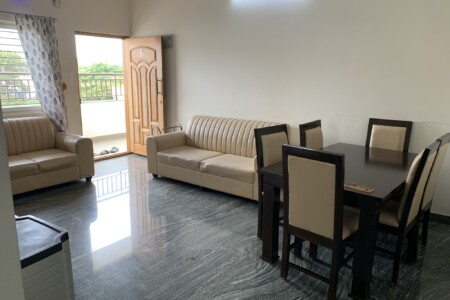
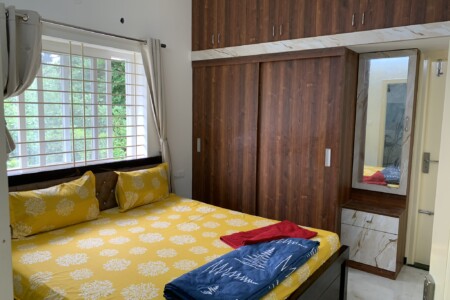
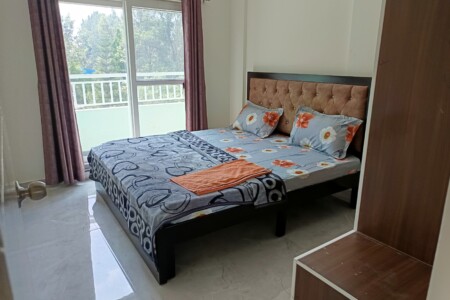
One of the biggest contributors to reduced stress is the sense of space. In a service apartment, employees are not limited to a single room. They have separate areas for sleeping, working, and unwinding. This simple distinction plays a powerful role in mental well-being. After a long day on-site or in meetings, being able to step into a living area, sit comfortably, and disconnect from work—even briefly—helps reset the mind. It creates a boundary that hotels simply cannot provide.
Another important factor is routine. Human beings function better when there is some level of predictability in their daily lives. Hotels, by design, are transient spaces. You check in, stay briefly, and leave. There’s no sense of continuity. In contrast, service apartments allow employees to settle in. They can unpack, organize their belongings, and establish a rhythm—whether it’s preparing breakfast, working at a dedicated table, or relaxing in the evening. This stability reduces the cognitive load that comes with constant adjustment.
Food is another area where stress often builds up during travel. Relying on restaurant meals every day can become both physically and mentally exhausting. At Sagar Niwas, the availability of a fully equipped kitchen gives employees the option to prepare simple meals or at least have control over what they eat. Even having the ability to make a cup of tea or a quick breakfast at their convenience adds a level of comfort that hotels rarely offer.
From an operational standpoint, this also translates into fewer complaints and less micromanagement. When employees feel comfortable and self-sufficient, they require less support for day-to-day issues. This allows management to focus on the project itself rather than constantly addressing accommodation-related concerns.
The environment itself also plays a critical role in stress reduction. Hotels can often be noisy, with constant movement of guests, staff, and events. For someone who needs to prepare reports, attend virtual meetings, or simply rest after a demanding day, this can be disruptive. At Sagar Niwas, the atmosphere is noticeably calmer and more residential. This quiet setting helps employees recharge properly, which in turn improves their performance the next day.
Location is another aspect that directly impacts stress levels. Long commutes in a city like Bangalore can be draining, especially when combined with tight work schedules. Staying close to Bommasandra Industrial Area minimizes travel time, reduces exposure to traffic, and gives employees more control over their day. Even saving an hour of commute daily can significantly improve overall well-being.
What I’ve also observed is that when employees are less stressed, their collaboration improves. Teams staying together in service apartments often communicate better, coordinate more efficiently, and build stronger working relationships. The shared living environment creates opportunities for informal discussions and problem-solving, which can be beneficial for project outcomes.
From a cost perspective, while stress reduction might seem intangible, it has very real implications. Lower stress leads to fewer sick days, better retention during long projects, and higher overall productivity. When you factor in the cost savings of service apartments compared to hotels, the decision becomes even more compelling.
Sagar Niwas, in particular, has consistently delivered on these expectations. The combination of spacious apartments, reliable amenities, and a professional yet homely environment makes it an ideal choice for corporate teams. It’s not about luxury—it’s about creating a space where employees can function at their best without unnecessary friction.
In conclusion, reducing travel stress is not about adding more services—it’s about choosing the right kind of accommodation. Service apartments like Sagar Niwas address the core needs of business travelers: space, stability, convenience, and comfort. For organizations managing teams on the move, this is not just a better option—it’s a smarter one.
As a healthcare operations professional responsible for managing hospital workflows, patient coordination, and system efficiency across care units in Bangalore, my role... Read More
Sustaining Growth Through People, Culture, and Leadership Alignment
As an HR Director responsible for shaping organizational culture, leading talent strategy, and aligning workforce planning across enterprises in Bangalore, my role... Read More
Driving Digital Transformation Across Traditional Enterprises
As a digital transformation consultant responsible for modernizing legacy systems, improving operational efficiency, and enabling technology adoption across organizations in Bangalore, my... Read More

 by
by 










Join The Discussion