As a business analyst working on performance optimization across teams in Bangalore, I’m trained to look at decisions through data, patterns, and measurable outcomes. While accommodation might seem like a simple operational choice, I’ve found that it has a surprisingly strong impact on employee productivity, cost efficiency, and overall project performance—especially in high-activity zones like Bommasandra Industrial Area.
During a recent engagement where I was tasked with analyzing operational efficiency for a team deployed near Bommasandra, one of the variables we studied was accommodation type. The comparison was straightforward: employees staying in traditional hotels versus those staying in service apartments like Sagar Niwas. What we discovered was not just interesting—it was actionable.
The first metric we looked at was cost per employee over time. On paper, hotel stays may appear manageable for short durations, but when extended beyond a week or two, the cumulative cost increases significantly. Daily room rates, food expenses, and additional service charges contribute to a higher overall spend. In contrast, service apartments demonstrated a more stable cost structure. With bundled amenities and the ability to accommodate multiple employees in a single unit, the per-person cost was noticeably lower. From a purely financial standpoint, this made service apartments a more efficient choice for longer assignments.
The second factor we evaluated was time utilization, particularly in relation to commute and daily routines. Employees staying closer to Bommasandra Industrial Area—such as those at Sagar Niwas—spent less time traveling and more time focused on work. Reduced commute times translated into higher availability for meetings, quicker response to on-site requirements, and less fatigue. When aggregated across a team, this time savings had a measurable impact on overall productivity.
Another key area of analysis was work environment effectiveness. Employees in hotels often reported challenges such as limited workspace, noise disturbances, and difficulty maintaining a consistent routine. These factors, while seemingly minor, contributed to reduced concentration and efficiency over time. In contrast, those staying in service apartments benefited from a more structured environment. The presence of dedicated work areas, quiet surroundings, and a residential setup allowed for better focus and longer periods of uninterrupted work.
We also examined employee well-being, which is often harder to quantify but equally important. Feedback surveys revealed that employees staying in service apartments reported higher satisfaction levels. They felt more comfortable, less stressed, and better able to manage their daily lives. Access to a kitchen, more space, and a sense of stability contributed to this positive experience. While these factors may not directly appear in financial reports, they influence performance, engagement, and retention—key indicators for any organization.
Another interesting insight came from analyzing team collaboration. Employees staying together in shared service apartments often had more informal interactions, which led to quicker problem-solving and better coordination. This was particularly evident in project-based teams, where communication is critical. The shared living environment created opportunities for discussions that might not happen in a more isolated hotel setup.
From a risk management perspective, consistency and predictability also played a role. Service apartments like Sagar Niwas offered a standardized experience, reducing variability in employee feedback and minimizing unexpected issues. This made it easier for management to plan and allocate resources without constantly adjusting for accommodation-related concerns.
One of the most compelling findings was the relationship between environment and output quality. Employees who stayed in a stable, comfortable environment were more likely to produce higher-quality work. They made fewer errors, required less rework, and demonstrated better focus during critical tasks. This reinforced the idea that productivity is not just about skill or effort—it’s also about the conditions in which work is performed.
Location, once again, proved to be a decisive factor. Being close to Bommasandra Industrial Area allowed employees to align their schedules more effectively with operational demands. It reduced delays, improved punctuality, and created a more predictable workflow. In a data-driven analysis, these small efficiencies add up to significant improvements over time.
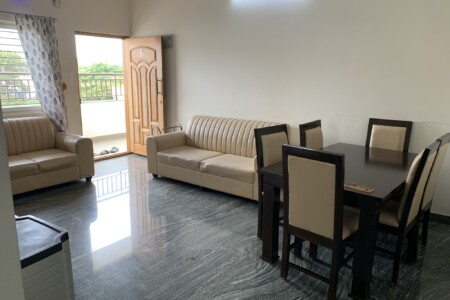
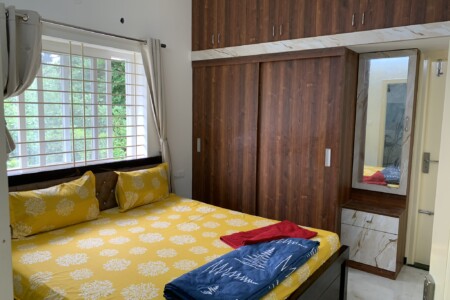
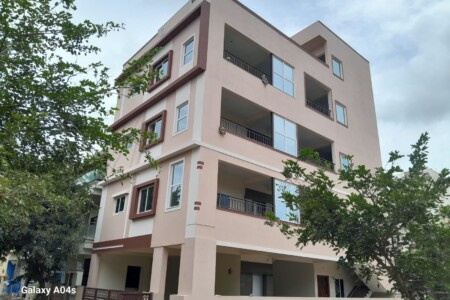
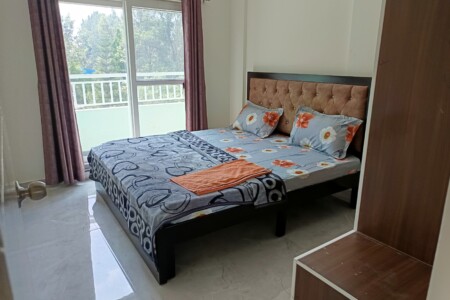
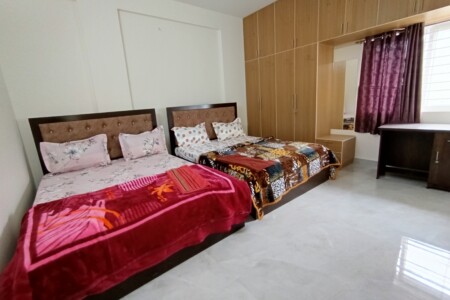
What makes Sagar Niwas particularly effective is how it aligns with these findings. It provides a combination of cost efficiency, functional space, and strategic location that supports both individual performance and team dynamics. It doesn’t just meet basic accommodation needs—it enhances the overall work experience in measurable ways.
From a business analysis perspective, the conclusion is clear: accommodation should be treated as a strategic variable, not just an operational expense. The choice between hotels and service apartments has tangible implications for cost, productivity, and employee satisfaction.
In conclusion, for organizations operating in Bangalore—especially in areas like Bommasandra—making data-driven decisions about accommodation can lead to better outcomes across the board. Service apartments like Sagar Niwas offer a model that aligns with modern business needs, delivering value not just in terms of cost, but in terms of performance and efficiency.
When you analyze the numbers and the experience together, the decision becomes obvious.
As a healthcare operations professional responsible for managing hospital workflows, patient coordination, and system efficiency across care units in Bangalore, my role... Read More
Sustaining Growth Through People, Culture, and Leadership Alignment
As an HR Director responsible for shaping organizational culture, leading talent strategy, and aligning workforce planning across enterprises in Bangalore, my role... Read More
Driving Digital Transformation Across Traditional Enterprises
As a digital transformation consultant responsible for modernizing legacy systems, improving operational efficiency, and enabling technology adoption across organizations in Bangalore, my... Read More

 by
by 









Join The Discussion