As a finance controller managing operational budgets and cost efficiency across projects in Bangalore, I’m constantly balancing two priorities that often seem at odds: controlling expenses while ensuring that employees have the resources they need to perform effectively. Accommodation is one of the most significant cost centers in corporate travel, especially in active zones like Bommasandra Industrial Area where teams may need to stay for extended durations.
Over time, I’ve evaluated various accommodation models—hotels, short-term rentals, and service apartments—through a financial lens. What became increasingly clear is that the right choice is not just about reducing costs, but about optimizing value. During our recent deployments near Bommasandra, shifting to Sagar Niwas proved to be a decision that aligned perfectly with this principle.
The first area where the impact was evident was cost predictability. Hotels often operate on dynamic pricing models, where rates fluctuate based on demand, availability, and season. This makes budgeting difficult and can lead to unexpected spikes in expenses. Service apartments like Sagar Niwas offer a more stable pricing structure, especially for weekly or monthly stays. This stability allows us to forecast costs more accurately and maintain tighter control over budgets.
Another significant factor is the total cost of stay, not just the room rate. In hotel environments, additional expenses such as food, laundry, and service charges can quickly accumulate. These costs are often variable and harder to track. At Sagar Niwas, many of these essentials are either included or more manageable, which reduces the overall financial burden. When we analyzed the total spend per employee, the savings were clear—without any compromise on quality.
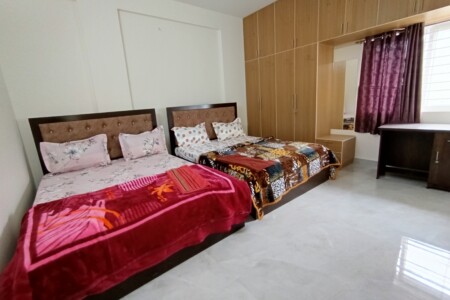
The ability to optimize occupancy is another financial advantage. In hotels, each employee typically requires a separate room, which increases costs proportionally. Service apartments, particularly larger configurations, allow multiple team members to stay together while maintaining comfort and privacy. This significantly reduces the cost per person, making it a more efficient use of resources.
From a financial governance perspective, simplified billing is a major benefit. Instead of processing multiple invoices with varying line items, we receive more consolidated and transparent billing. This makes it easier to review, approve, and audit expenses. It also reduces administrative effort, allowing finance teams to focus on more strategic tasks rather than operational details.
Employee productivity is another factor that indirectly impacts financial performance. When employees are comfortable and well-supported, they are more focused and efficient. During our evaluation, we observed that teams staying at Sagar Niwas reported higher satisfaction levels and fewer disruptions in their workflow. This translated into better output and reduced delays—both of which have a measurable impact on project costs.
Location also plays a role in cost efficiency. Staying close to Bommasandra Industrial Area reduces transportation expenses and minimizes time lost in transit. This not only lowers direct costs but also improves overall efficiency, as employees can spend more time on productive work rather than commuting.
Another important consideration is long-term value. While hotels may appear convenient for short stays, they are not designed for extended assignments. Service apartments, on the other hand, are structured to support longer durations, offering better value over time. For organizations managing ongoing projects or frequent travel, this becomes a sustainable solution.
Risk management is also a part of financial oversight. Unpredictable costs, inconsistent service, and employee dissatisfaction can all lead to additional expenses. By standardizing accommodation through a reliable provider like Sagar Niwas, we reduce these risks. The consistency in service and pricing creates a more controlled and predictable environment.
What stands out about Sagar Niwas is its ability to deliver balanced value. It doesn’t just focus on cost savings—it provides an environment that supports employees while maintaining financial discipline. This balance is essential for any organization looking to scale operations without increasing overhead unnecessarily.
Over time, I’ve come to see accommodation as a strategic lever in financial management. It’s not just an expense to be minimized—it’s an investment that, when managed correctly, can improve efficiency, reduce risk, and enhance overall performance.
In conclusion, for finance leaders managing corporate travel in Bangalore, the choice of accommodation should be guided by both cost and value. Service apartments like Sagar Niwas offer a solution that aligns with these objectives, providing predictable pricing, operational efficiency, and a better experience for employees.
When financial discipline meets practical living, the result is a smarter, more sustainable approach to corporate stays.
As a healthcare operations professional responsible for managing hospital workflows, patient coordination, and system efficiency across care units in Bangalore, my role... Read More
Sustaining Growth Through People, Culture, and Leadership Alignment
As an HR Director responsible for shaping organizational culture, leading talent strategy, and aligning workforce planning across enterprises in Bangalore, my role... Read More
Driving Digital Transformation Across Traditional Enterprises
As a digital transformation consultant responsible for modernizing legacy systems, improving operational efficiency, and enabling technology adoption across organizations in Bangalore, my... Read More

 by
by 



Join The Discussion